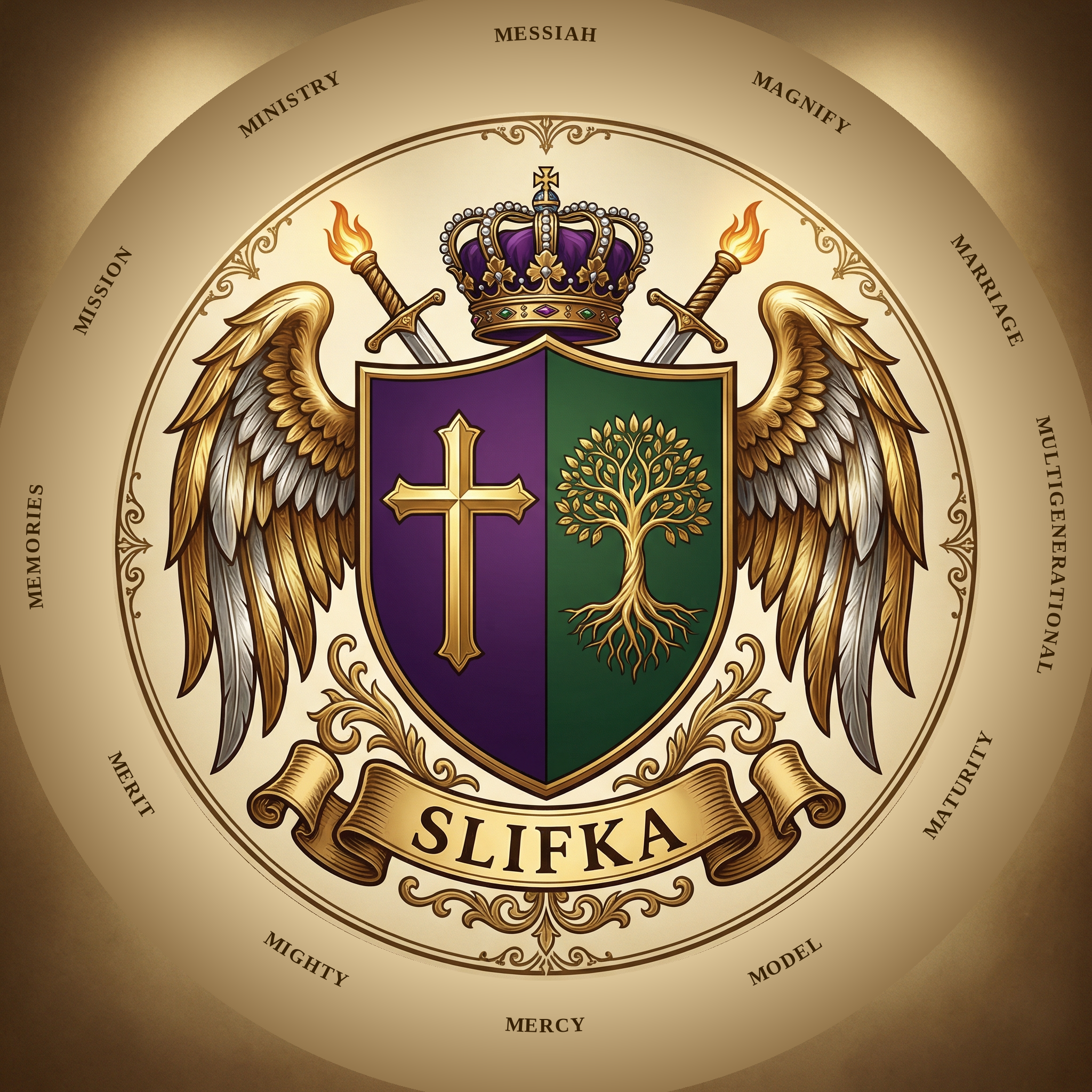
The 12 Rules of Life · How We Remember
Memory
"The sacred rhythms and rites of passage that mark the Slifka story across generations."
How We Remember
Heritage Traditions
"The sacred rhythms and rites of passage that mark the Slifka story across generations."
Traditions are the architecture of memory. They are the rituals, rhythms, and rites of passage that give a family its identity, its story, and its sense of belonging to something larger than itself. The Slifka family traditions are not merely customs — they are covenantal acts that declare: we belong to God, and we belong to each other.
The 12 Codes of Memory
1. Naming with Purpose
We inquire of the Lord to name our children. A name is a declaration of identity and destiny. We name our children with prayer, intention, and prophetic hope.
"Before I formed you in the womb I knew you, and before you were born I consecrated you."
— Jeremiah 1:5
2. The Living Journal
We journal our children's lives until they are 18 years old. These journals are a gift — a record of God's faithfulness, our love, and their story.
"Write this as a memorial in a book and recite it in the ears of Joshua."
— Exodus 17:14
3. Passport to Purity (Age 13)
At age 13, we take each child on a special retreat to prepare them for adolescence with biblical truth about purity, identity, and God's design for their body and relationships.
"How can a young man keep his way pure? By guarding it according to your word."
— Psalm 119:9
4. Passport to Maturity (Age 16)
At age 16, we celebrate the growing maturity of our child with a meaningful rite of passage — affirming their character, their gifts, and their calling.
"Let no one despise you for your youth, but set the believers an example in speech, in conduct, in love, in faith, in purity."
— 1 Timothy 4:12
5. Passport to Courtship (Age 18)
At age 18, we provide guidance, blessing, and wisdom for the season of courtship — preparing our children to pursue marriage with godly intention and parental involvement.
"He who finds a wife finds a good thing and obtains favor from the Lord."
— Proverbs 18:22
6. Rite of Passage to Adulthood
We mark the formal transition to authentic, godly adulthood with a ceremony, a charge, and a blessing. Adulthood is not assumed — it is conferred with honor.
"When I was a child... When I became a man, I gave up childish ways."
— 1 Corinthians 13:11
6. Family Sabbath
We set apart a weekly time for rest, worship, and family connection. The Sabbath is not a rule — it is a gift. We protect it fiercely.
"Remember the Sabbath day, to keep it holy."
— Exodus 20:8
6. Annual Vision Retreat
Each year, we gather as a family to pray, reflect, and align our goals with God's purposes for the coming year. We do not drift — we decide.
"Where there is no prophetic vision the people cast off restraint."
— Proverbs 29:18
6. Legacy Letters
We write letters of blessing and affirmation to our children on their birthdays. These letters are a treasury of love, wisdom, and prophetic encouragement.
"The blessing of the Lord makes rich, and he adds no sorrow with it."
— Proverbs 10:22
6. Generational Giving
We participate in a family service or giving project annually — teaching our children that we are blessed to be a blessing.
"He who is generous will be blessed, for he gives some of his food to the poor."
— Proverbs 22:9
6. Storytelling
We regularly share testimonies of God's faithfulness in our family's history. Every generation must know the stories of what God has done.
"We will not hide them from their children, but tell to the coming generation the glorious deeds of the Lord."
— Psalm 78:4
6. The Spoken Blessing
We speak a formal biblical blessing over our children regularly. Words of blessing are seeds of destiny. We do not withhold them.
"The Lord bless you and keep you; the Lord make his face shine on you and be gracious to you."
— Numbers 6:24–25